A small house has the same catalogue obligations as a large one and a fraction of the staff. The usual response is heroism in the last week: evenings spent writing, a translation ordered late, a catalogue closed at two in the morning. What follows is a duller alternative that gets the same catalogue out with the week intact.
Photograph the lot as if it were the notice
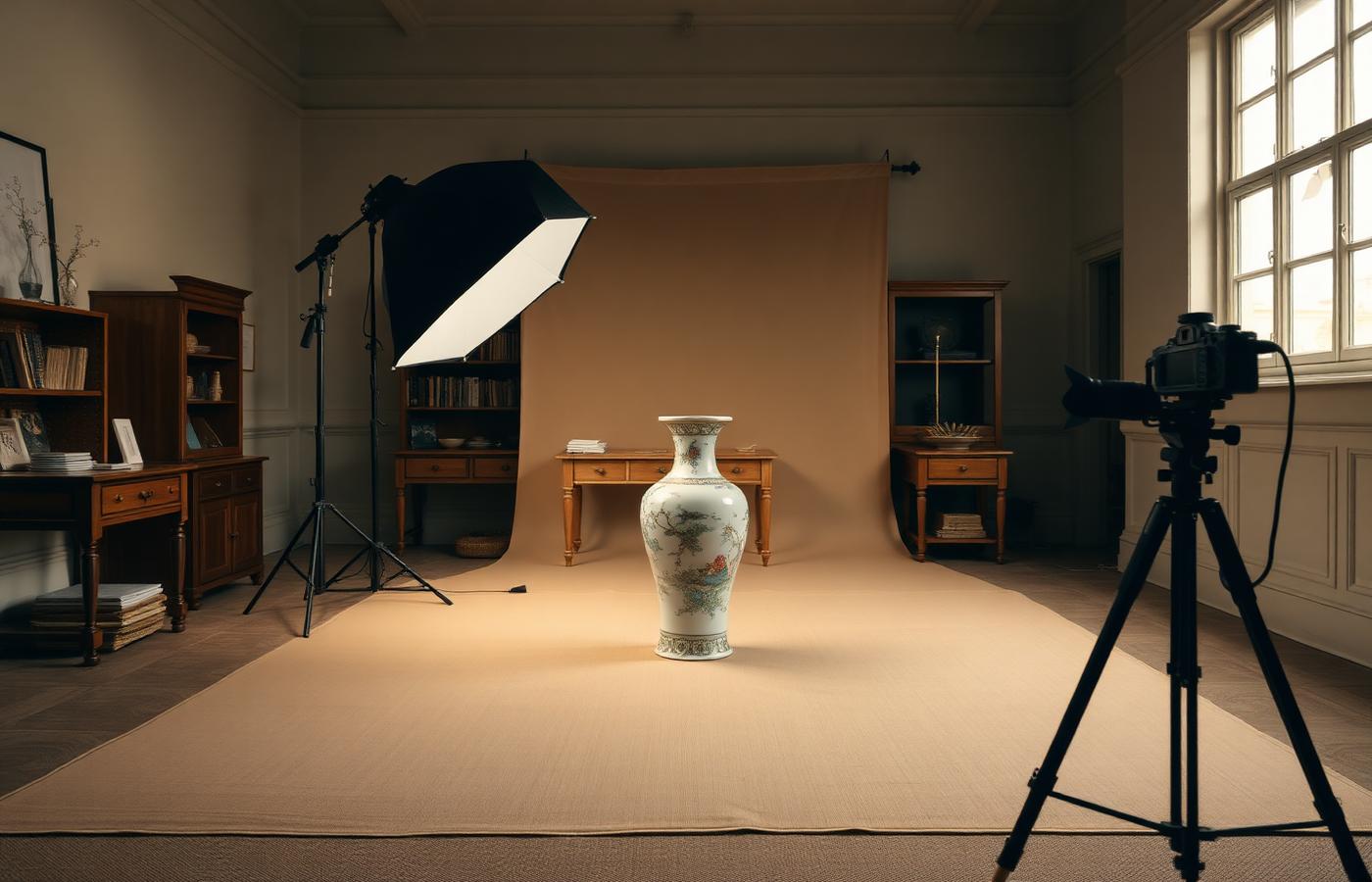
The quality of everything downstream is set here. For each object, take four to five frames: a full view against a neutral ground, a three-quarter view that shows depth and construction, a close view of any mark, signature or label, and a close view of every significant damage. Shoot in even, indirect light — a window and a white card beat a ring flash — and keep the object filling the frame.
Photograph the damages deliberately rather than avoiding them. A condition narrative written from images that hide the chip is a complaint waiting to be filed, and the same frame that protects you also produces a better description. Number the files by lot as you go; renaming three hundred images later is its own lost day.
Say the note out loud, in ten words
The cataloguer's note is the highest-value ten seconds in the workflow. It is what the photograph cannot show: signed on the base, from a Norman private collection, drawer linings replaced, sold with its original key. Dictate it into your phone or type it into a field while the object is still in front of you.
These notes do two things. They put facts into the notice that no image contains, and they anchor the writing — a note saying "cast by Barbedienne, foundry stamp to the reverse" changes the whole register of the paragraph that follows. Notes are not required, but a house that writes them gets consistently better notices than one that does not.
Generate, then correct — never the reverse
Upload the photographs, add the note, and let Catalot write the notice: roughly twenty seconds for title, description, materials, style and period, marks, condition, visible dimensions and keywords, in English and French. Then read it against the object with a specialist's eye.
Corrections are usually small and always faster than composition. Tighten the date range, name the maker the engine only described, remove a hedge you can resolve, add the damage that the photographs under-state. Budget one minute per lot for this pass and you will usually finish under it. The discipline that matters is direction of travel: correcting a draft is a different mental task from producing one, and it is the one that scales to three hundred lots.
Save, export, and keep the archive structured
A saved lot in Catalot keeps both languages, every field and its photographs, numbered sequentially for your sale. When the sale is assembled, export the whole catalogue as CSV — one row per lot, every field in its own column — and hand it to whoever produces your printed pages or uploads to your marketplace.
Because the fields are consistent, the export is not a dead end. It can be filtered, reordered by lot number, checked for missing conditions, and compared with previous sales. Over a year, a small house that catalogues this way builds a structured record of everything it has sold — which is exactly the asset that makes the next catalogue faster still.
The arithmetic
Five photographs, ten seconds of note, twenty seconds of writing, a minute of correction: call it two minutes a lot from a standing start, against ten to twenty by hand. On a three-hundred-lot sale that is the difference between a fortnight of specialist time and an afternoon.
The point is not speed for its own sake. It is that the hours released go back into the parts of the job that only a specialist can do: sourcing, cataloguing decisions, condition inspection, and the conversations with vendors and buyers that actually determine what the sale makes.